Virginia opens adult-use license applications on February 1, 2027, with the Cannabis Control Authority set to begin issuing licenses that May 1. A sizable slice of those early licenses is set aside for impact licensees - operators with a qualifying marijuana conviction, Pell Grant history, veteran status or other statutory ties to communities hit hardest by prohibition. Most of those applicants will need outside capital to actually open a store, and that is where the trouble starts.
A 51% Ownership Rule With No Definition of Control
The statute requires impact licensees to be at least 51% owned and directly controlled by qualifying individuals. Fair enough, in theory. The problem is that "control" appears nowhere in the statutory definitions and nowhere in the September 9, 2026 draft regulations. Only change of control gets defined, and only in operational terms. Yet control is the hinge for three separate rules: the 51% impact test, the 49% ceiling on transferring a license within five years of issuance, and the microbusiness bar on holding a second license. Build a financing structure around an undefined term, and you are building on sand.
What Gotham Buds Signals for Deal Structuring
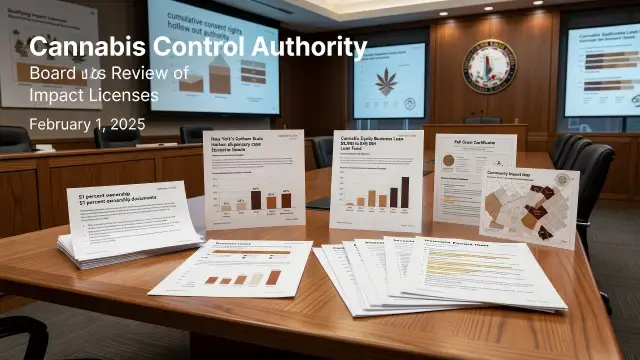
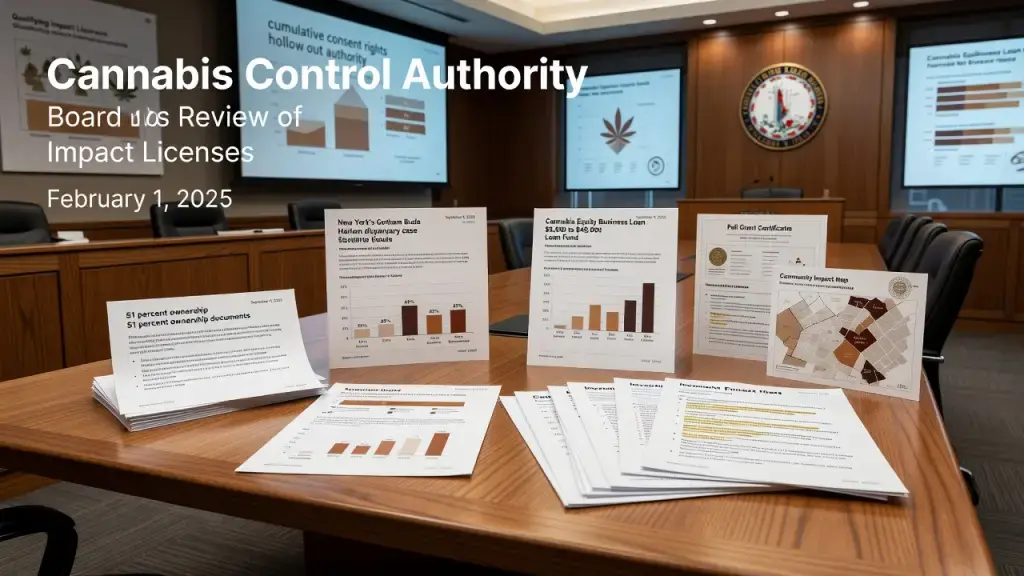
New York's Cannabis Control Board gave the industry a preview of how this plays out. In August 2026, the Board reviewed the ownership structure behind Gotham Buds, a Harlem retailer licensed under the Conditional Adult-Use Retail Dispensary program. The qualifying owner held 51% of the vote and the title of chief operating officer - but only 14% of the economics. Two non-qualifying members held 19.5% each, split 32% of profits apiece, controlled consent rights over ten categories of decisions, and took priority on roughly the first $99,577 of distributable cash. The Board found no sole control. It called the qualifying owner controlling in name only.
Two things from that ruling matter for Virginia. First, the Board's analysis was cumulative - no single clause sank the deal, but the whole package did. Checking each investor right against "market standard" one at a time does not protect a structure if, taken together, the documents hollow out the qualifying owner's authority. Second, the store had been open for nearly three years before anyone adjudicated the structure. A regulator willing to revisit a deal that long after closing is not a passive counterparty. It is a risk that has to be priced and managed before the ink dries, not after.
Competing Interests at the Negotiating Table
Impact licensees and investors want different things, and the gap between them is exactly where predatory terms tend to form.
- Impact licensees often need a deal that simply gets the doors open - release from a personally guaranteed lease can look like a win even if the rest of the terms are thin.
- Investors want manager control, consent rights over material decisions, super-voting equity, drag-along rights and a profits interest disproportionate to their equity stake - the standard toolkit for protecting capital.
- Regulators, as Gotham Buds shows, may read that same toolkit, stacked together, as evidence the qualifying owner never really held control at all.
Virginia's statute, at Section 4.1-606(B)(19), directs the Board to build an approval process for ownership, financing, management and brand-licensing agreements tied to the interest limits in Section 4.1-807. That process does not exist yet. A related provision calls for scrutiny of whether a financing arrangement is commercially reasonable or amounts to undue influence, with factors like price-setting authority and financing dependence - language that reads more like a check on alcohol-style producer leverage over retailers than a direct constraint on licensee capital raises. Either way, deal teams are negotiating against a rulebook that is not finished.
Public Money Will Shape Private Terms
The Virginia Cannabis Equity Business Loan Fund is supposed to ease some of this pressure. From May 1, 2027 to May 1, 2028, the CCA must deposit 75% of marijuana establishment annual license fees into the fund within 60 days of receipt. Draft fees range from $5,000 for a transporter to $45,000 for tier V cultivation, which on any realistic license count adds up to single-digit millions spread across many applicants - not nothing, but not enough to replace private capital.
The longer-term outlook softened further when HB 30 struck the fixed allocation percentages from the net profits provision, including the 30% once earmarked for the Cannabis Equity Reinvestment Fund. Net profits now get appropriated among education, the equity fund, community services boards and public health with no set split, meaning the equity share is a yearly budget fight rather than a locked-in entitlement. Less public money flowing to impact licensees means worse terms from private investors, or no opening at all.
Final regulations are due February 1, 2027, and the current comment period is the real opportunity to push for a workable definition of control and clarity on the microbusiness license mandate. Expect regulatory guidance to keep evolving after that date - Maryland's social equity licensees learned what was actually bankable through successive rounds of agency FAQs, not through the published rules themselves. Virginia operators and investors should plan for the same pattern.