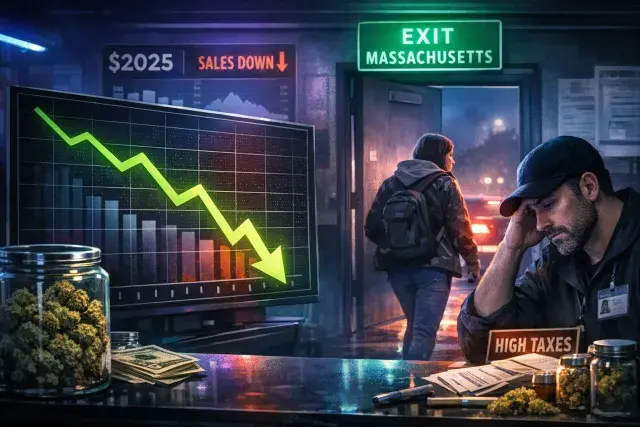
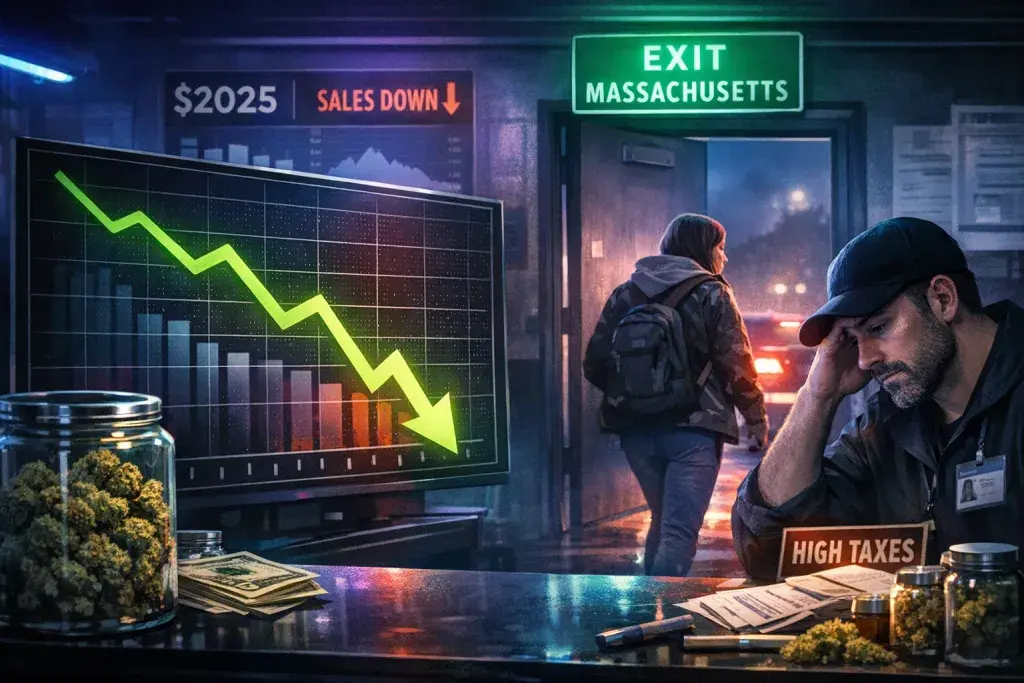
Connecticut's cannabis retailers recorded $290 million in sales for 2025, a slight decline from the previous year's $293 million, even as December hit the highest monthly total since recreational legalization. State records highlight this paradox amid growing competition from neighboring Massachusetts, where lower prices draw shoppers across the border. High taxes in Connecticut continue to squeeze local businesses and shift consumer dollars out of state.
Tax Burden Drives Customers Across State Lines
Shoppers face three layers of taxation in Connecticut: a 6.35 percent state sales tax, a 3 percent local tax, and a THC-based levy adding 10 to 15 percent. Massachusetts imposes a single cannabis tax on top of the product price, making purchases there far cheaper. Erik Davidson, a Massachusetts resident, captured the frustration: "Here in Connecticut it’s kind of crazy.” Benjamin Zachs, chief operating officer at Fine Fettle, noted that 15 to 20 percent of his West Springfield location's customers hail from Connecticut, with border towns feeling the heaviest impact.
Market Evolution Since 2021 Legalization
Adult-use cannabis gained approval in 2021, with retail stores opening a year later. Today, 61 licensed retailers operate statewide, including 29 hybrids approved for both medical and recreational sales. A recent state law expands this dual-sales permission, prompting conversions. Fine Fettle, with multiple locations, begins hybrid operations this week to broaden access. Zachs explained the move: “We wanted to make access more available to people and give more options because the expansion has been all recreational and not medical.”
Local Revenue and Future Challenges
Dispensary sales directly fund host communities, so declining figures reduce municipal revenues at a time when the market matures. Price sensitivity remains a dominant factor, as Zachs emphasized, potentially limiting growth despite hybrid expansions. Connecticut's tax structure, while generating state income, risks further erosion of its market share to lower-tax neighbors, underscoring tensions between regulation and economic viability in the young recreational industry.