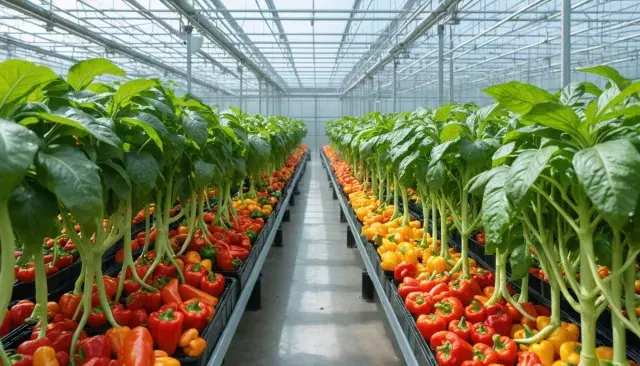

Production at Fresh Venture Farms, a bell pepper propagator in Ontario, Canada, has risen by an average of 16% over four years through targeted improvements in irrigation water quality. The operation credits cavitating ultrasonic transmitters from Ultramins, combined with nanobubble technology and hydrogen peroxide, for healthier roots and higher yields. These methods enable full water recycling, a critical advantage in controlled-environment agriculture where pathogens threaten crops.
Targeting Pathogens in Recirculating Systems
Bell pepper cultivation in greenhouses relies on precise water management, as recirculating systems amplify risks from soilborne pathogens like Fusarium and Pythium. Fresh Venture Farms installed USAF™ DT-100 transmitters from Ultramins over four years ago, starting in the source pond before expanding to silos and daily supply lines. DNA sequencing from A&L Laboratories confirmed the transmitters' effectiveness, showing complete elimination of these pathogens in treated water samples.
Layered Technologies Drive Efficiency Gains
The farm added nanobubble technology last year and maintains regular dosing of 35% hydrogen peroxide, forgoing other disinfectants. Florian Locher, a key figure at the operation, reports hydrogen peroxide use has dropped more than 50%, yielding savings of $0.10 to $0.15 per square meter annually. Root quality has transformed, with photos revealing robust development throughout the growing season and no need for synthetic agents, cutting costs per square meter by 40% to 50%.
Rapid Returns and Sustainable Scaling
Return on investment for the transmitters came in under six months, far quicker than typical farm upgrades. By 2025, the farm projects yields exceeding 35 kilograms per square meter. Locher calls the approach a straightforward choice for peers, as it simplifies irrigation, ensures clean water for 100% recycling, and removes daily concerns over contamination. Such pathogen-free systems support broader shifts toward resource-efficient horticulture amid tightening water regulations in regions like Ontario.