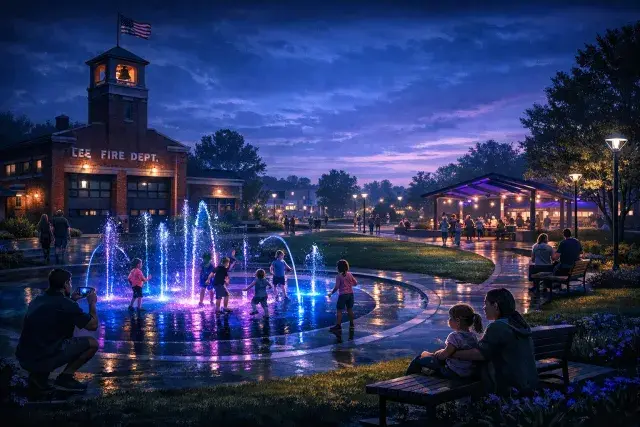
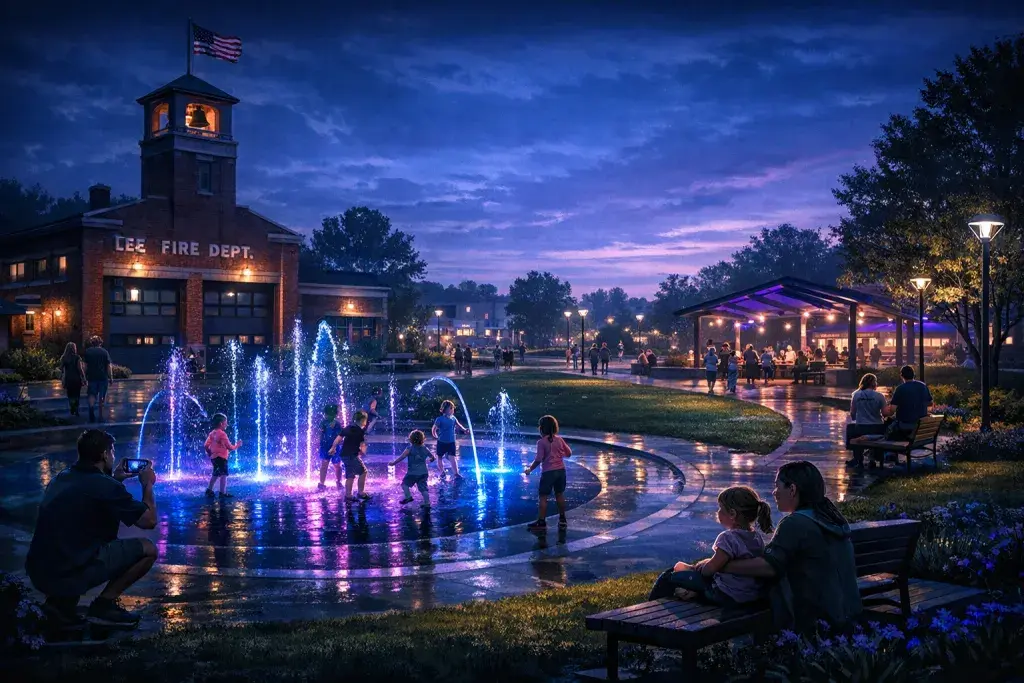
Lee town officials have endorsed a design to convert the land around the existing Main Street fire station into expansive green space, following the selection of one proposal from three drafted by engineer Matt Puntin of SK Design Group. Construction on a new public safety complex starts in February, with departments relocating there by 2027, freeing the site for public use. This move prioritizes open grass areas, walking paths, and recreational features to serve residents as the town reimagines its core spaces.
Preferred Design Emphasizes Public Access and Recreation
The chosen third option transforms the grounds around the fire station and neighboring EMS building into broad lawns edged by paths, creating a central public gathering area. Unlike the other plans, it shifts accessible parking to a lot behind the EMS building, which widens the front grass patch for potential recreational development. Puntin's renderings feature a splash pad, though he noted a playground could replace it based on resident input.
This layout supports broader community needs by fostering outdoor activity in a walkable downtown setting. Small-town public spaces like these often anchor daily life, offering venues for informal gatherings that build social ties without relying on distant parks.
Strategic Timing Ties to Town Revitalization Efforts
Implementation awaits the 2027 completion of the new complex, giving the Fire Station Reuse Committee roughly two years to refine plans ahead of the May town meeting. The design serves as a starting point, not a final blueprint, with an open forum planned for March to collect resident feedback on both land and buildings. Town Administrator Chris Brittain highlighted this engagement to align changes with local priorities.
These steps coincide with Lee's economic push, including a state grant program to fill vacant storefronts. Retaining green space positions the town for additional grants, as funders favor projects that expand public amenities and environmental features. Such incentives have helped similar communities offset infrastructure costs through layered funding.
Preserving History While Serving Modern Needs
Officials aim to retain the historic fire station and EMS buildings in public hands after relocation, repurposing them for town offices like the Lee Food Pantry and a renovated public meeting space. Annie Lee, chair of the Lee Youth Commission, stressed balancing visitor appeal with resident-focused uses: “While we want to attract visitors to our town, we also have to think of the permanent residents of this town.”
This approach reflects a common municipal strategy: adaptive reuse of aging public buildings preserves heritage and avoids demolition expenses, while green surroundings enhance usability. In rural New England towns, such transformations sustain vitality amid shifting demographics and budgets, turning relics of past services into hubs for current community functions.