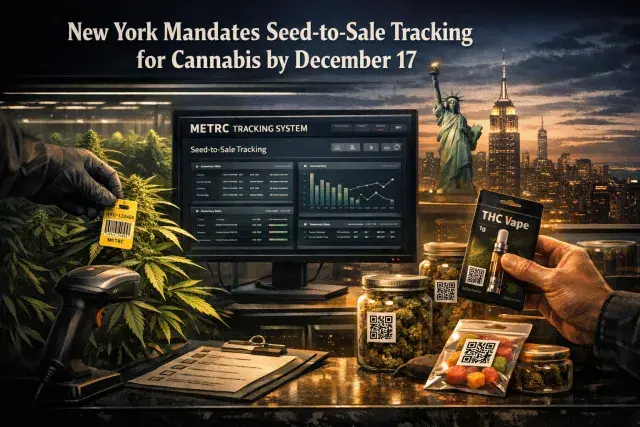
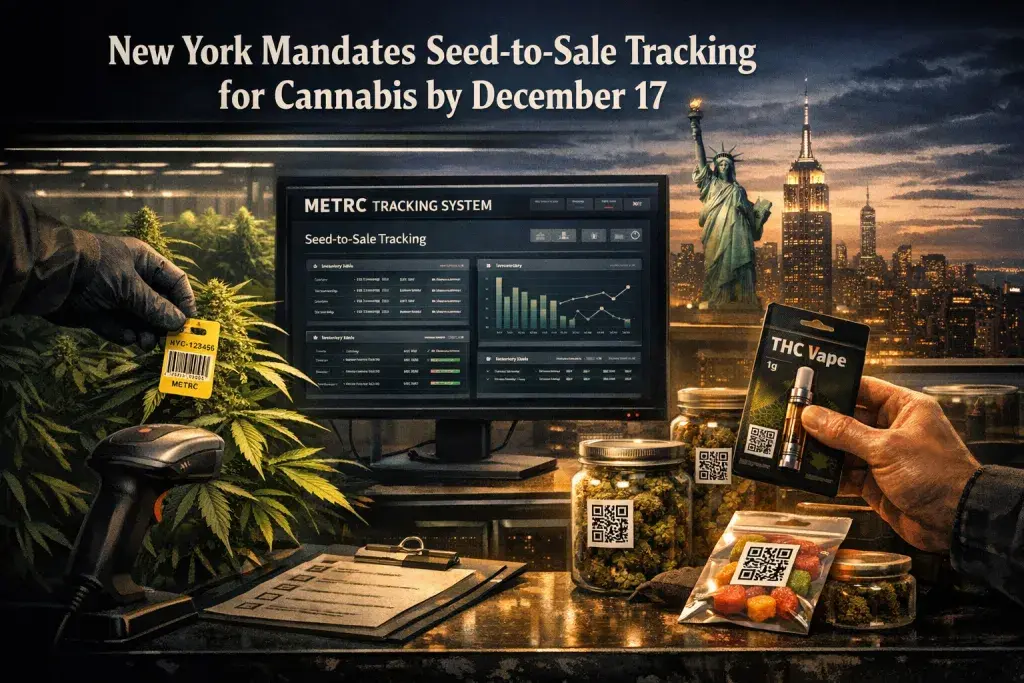
New York's Office of Cannabis Management requires all licensed cannabis businesses to register with the Metrc tracking system by December 17, imposing a seed-to-sale regime that follows products from cultivation to retail shelves. This digital oversight assigns unique QR-coded labels to plants, packages, and retail items, aiming to verify safety testing and curb illegal diversion. The policy addresses persistent challenges in the state's nascent legal market, where unregulated sales have undercut licensed operators and raised public health concerns.
System Mechanics and Immediate Requirements
Businesses that handle cannabis—cultivators, processors, labs, and retailers—must complete Metrc's online training and secure login credentials by the deadline. Growers attach unique tags to individual plants, bulk packages receive a Package UID, and consumer products get Retail Item ID QR codes. Current inventories demand entry into the system starting December 17 for most operators, though retailers gain until January 12, allowing holiday sales continuity for existing stock.
New shipments after December 17 require full logging before sale, with gummies and vapes needing QR codes prior to distribution. Distributors ensure coded products reach stores by February 28, exempting older inventory from relabeling. Regulations cap each Package UID at 100 pounds, compelling bulk handlers to divide harvests into trackable units and preventing gaps in oversight.
Cost Relief and Safety Enhancements
Tags cost $0.10 apiece, but the state provides one-time free supplies: 2,500 plant tags for cultivators, 750 package tags for distributors, and 750 item tags for microbusinesses. By March 31, all shelf products must carry digital proof of passing safety tests, with labs now optionally reporting minor cannabinoids for detailed chemical profiles beyond THC and CBD.
Pre-system tested items allow digital verification without resending samples, streamlining compliance. Multi-packs require separate testing for each variant before packaging, heightening quality controls. License suffixes like C1 for cultivation sites or D1 for dispensaries enable regulators to trace batches from specific facilities, even among multi-site operators.
Stricter Controls for Growth and Compliance
New strains post-deadline demand special approval, blocking unverified genetics from the legal supply chain. Provisional licensees and certain branding processors escape credentialing if they avoid direct plant handling. This framework builds on seed-to-sale models in states like California and Colorado, where tracking has reduced black-market infiltration and bolstered consumer trust through verifiable safety data.
For New York's market, still scaling since adult-use legalization in 2021, the system promises supply chain transparency amid competition from illicit sources. It positions the industry for sustainable expansion by linking every product to its origins, testing history, and handlers, ultimately safeguarding public health while supporting legitimate businesses.