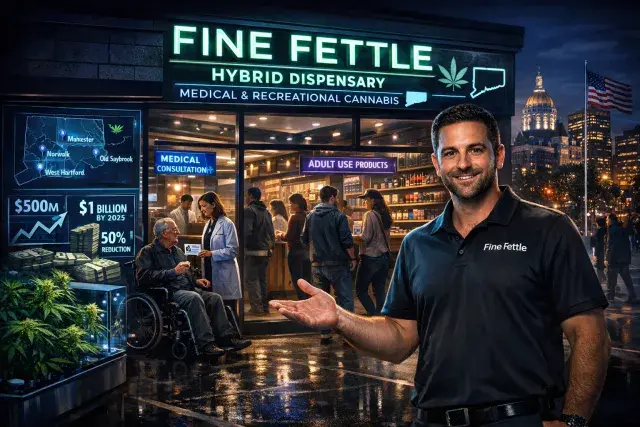
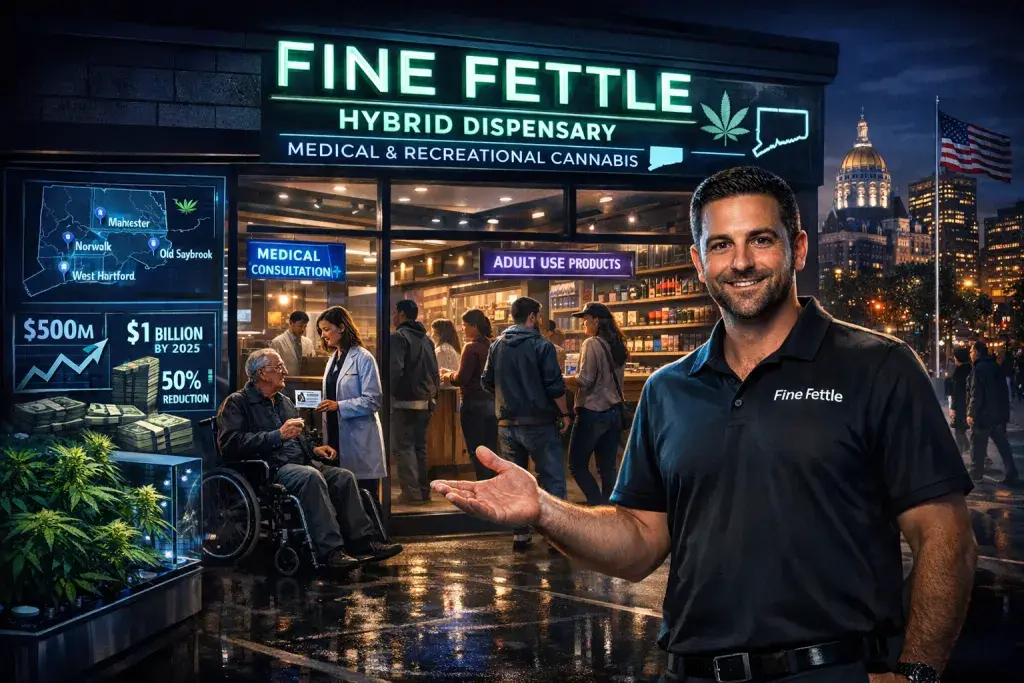
In Hartford, Conn., all nine Fine Fettle cannabis dispensaries will begin serving both medical patients and adult-use customers starting Thursday, thanks to recent state legislation. This shift marks a pivotal expansion of access in Connecticut's evolving cannabis market, promising greater equity for medical users while bolstering the recreational sector.
Key Developments and Company Response
Fine Fettle, a prominent operator with locations in Manchester, Norwalk, Old Saybrook, Waterbury, West Hartford, and beyond, has fully converted its facilities to hybrid models. This allows recreational retailers to cater to Connecticut's Medical Marijuana program participants without compromising service quality.
- Conversion enabled by changes in state regulations from the Department of Consumer Protection (DCP).
- COO Benjamin Zachs emphasized efficiency: "Patients shouldn’t have to travel far for care or be stuck with limited options."
- Expansion builds on Fine Fettle's presence in Massachusetts and Georgia, aligning with multi-state growth trends.
Background on Connecticut's Cannabis Evolution
Connecticut legalized recreational cannabis in 2021, following medical marijuana's establishment in 2012. However, medical patients often faced geographic barriers and limited providers. The new law addresses this by permitting hybrid operations, a response to advocacy for integrated care amid rising demand—adult-use sales topped $500 million in the state's first two years, per industry reports.
Expert insight reveals this mirrors national patterns: states like Colorado and California saw medical program enrollment stabilize post-recreational launch due to hybrid models, reducing illicit market reliance by up to 50% in urban areas and improving patient outcomes through consistent access to strains for chronic pain, anxiety, and epilepsy.
Implications for Health Equity and Market Growth
For public health, hybrids enhance compassionate care, as Zachs notes, by merging expertise from medical consultations with recreational efficiency. This could lower travel burdens in underserved regions, vital since 20% of Connecticut medical patients previously drove over 30 miles for products.
Broader societal trends point to normalization: cannabis integration supports destigmatization, with studies linking regulated access to fewer opioid prescriptions. Yet challenges remain, including supply chain strains and ensuring hybrid priority for medical needs. Looking ahead, this bolsters Connecticut's economy—projected $1 billion in annual sales by 2025—while prioritizing patient-centered reform.
Fine Fettle's move exemplifies how policy innovation drives inclusive growth, setting a model for other states navigating cannabis duality.