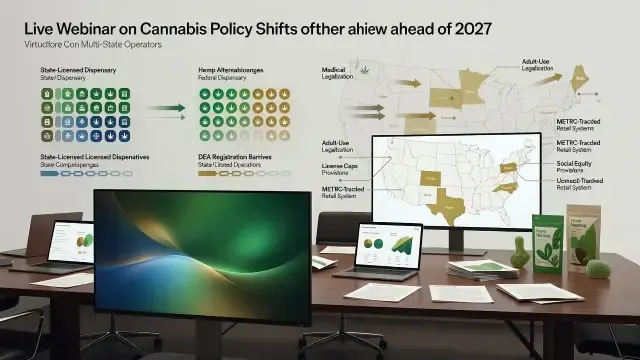
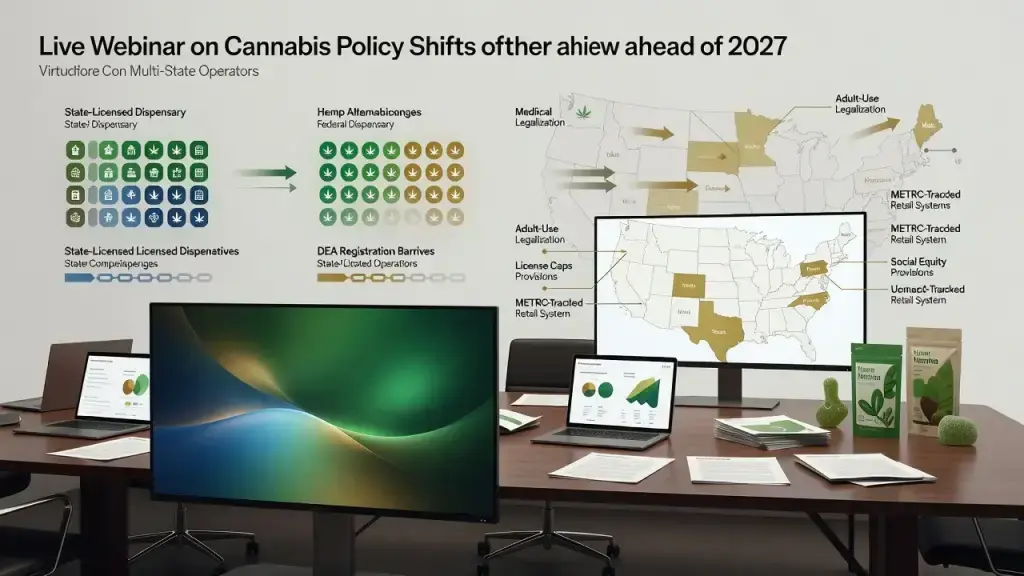
Cannabis operators heading into 2027 are navigating three collision points at once: federal rescheduling that remains unresolved, a looming federal crackdown on intoxicating hemp products, and a midterm election outcome that has reshuffled the politics around reform. A live webinar on November 19 will bring together attorneys from Harris Sliwoski and Ananda Strategy founder Hirsh Jain to walk through what these shifts actually mean for state-licensed businesses trying to plan a fiscal year under conditions that keep moving underneath them.
Why Rescheduling Still Isn't Settled
Moving marijuana to Schedule III sounds like a clean fix for the industry's long-standing tax problem. Section 280E of the federal tax code currently bars state-licensed cannabis businesses from deducting ordinary business expenses, a burden that has squeezed margins at dispensaries and processors alike for years. If medical marijuana lands on Schedule III, licensed medical operators could see meaningful relief on their tax bills. That part looks close to happening. The catch is that the companion proposal to reschedule adult-use marijuana is still tied up in litigation, which means the two halves of the market may end up on different footing - medical operators getting a tax break while adult-use retailers keep absorbing 280E in full. That's not a small distinction for multi-state operators running both license types under one roof.
A Closing Hemp Loophole and a Supply Chain Problem
Intoxicating hemp products - the gas-station gummies and drinks built on the 2018 Farm Bill's hemp definition - have operated for years in a gray zone state-licensed cannabis never got to use. Federal action aimed at closing that loophole is coming, and it will reshape competitive dynamics in states where hemp-derived THC products have undercut regulated dispensary pricing. Separately, and arguably more disruptive in the near term, DEA registration requirements are pushing toward closed supply chains for certain marijuana businesses, meaning registrants built around the expedited application process or existing DEA status may be barred from sourcing through the same state-licensed channels everyone else uses. That bifurcation risk is real: splitting a medical market into two parallel, smaller supply chains tends to make both less economically sustainable, not more, since neither side gets the volume or wholesale pricing leverage a unified market would support.
State Ballots Didn't Move the Same Direction
State-level politics are not uniform right now, and that's worth sitting with. Massachusetts voters rejected a measure to repeal their adult-use market outright. Idaho voters preserved the public's ability to bring reform measures to the ballot in the first place. Meanwhile Pennsylvania and Wisconsin appear to be building momentum toward adult-use legalization in 2027, and even states with no recent history of cannabis reform - Texas, Iowa, North Carolina - are showing signs of policy movement. For operators and investors, this patchwork matters more than any single federal headline. License caps, social equity provisions, and tax structures still get written state by state, and a reform win in one legislature doesn't predict what the next one does.
What Operators Should Be Watching
- Whether adult-use Schedule III litigation resolves before new state tax years begin
- How DEA's closed supply chain requirement affects wholesale menus and compliant sourcing options
- Which state legislatures move on adult-use legalization and under what license and tax framework
- How intoxicating hemp restrictions change retail competition for dispensaries operating under METRC-tracked systems
None of this resolves neatly by January. The webinar format - live, with audience questions accepted in advance - reflects that operators, investors, service providers, and regulators are all working from partial information right now, and a straight briefing on where things stand is worth more than speculation dressed up as certainty.