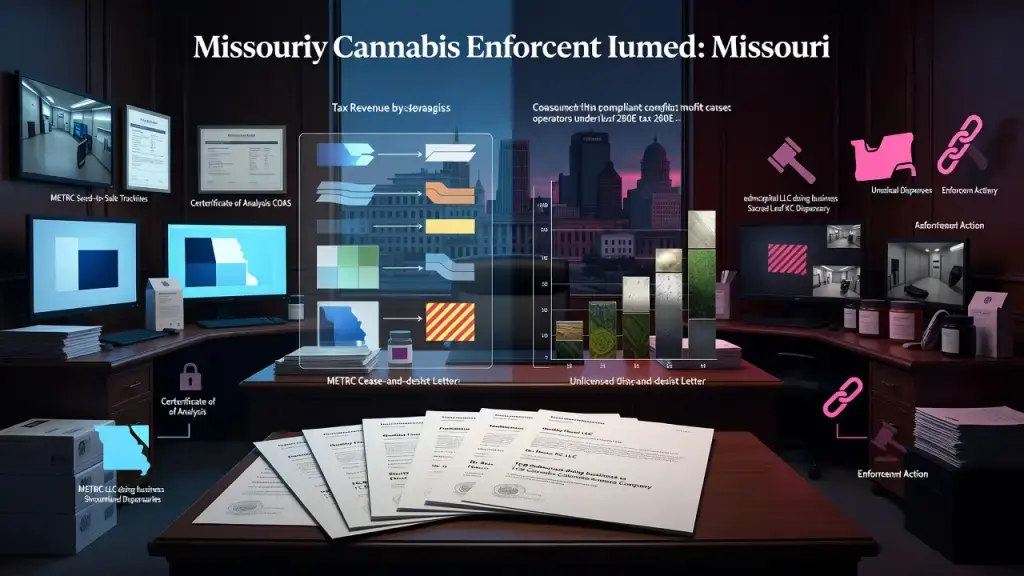
Missouri Attorney General Catherine Hanaway's office sent cease-and-desist letters to eight businesses accused of selling marijuana products without a license. The announcement, made Friday, names operations in and around Kansas City and accuses them of misleading consumers into believing they hold legal dispensary status under state law. For an industry built on tight regulatory compliance, the action is a reminder of how thin the line is between a licensed storefront and an illegal one.
What the Letters Actually Allege
The named businesses - Quality Floral LLC, Prohibition Cannabis, Motion City LLC, Gas House KC LLC, Dr. Smoke, TCB Collections (doing business as TCB Cannabis Collections Company), edmcapital LLC (doing business as Sacred Leaf KC Dispensary) and Shroomland LLC (doing business as Shroomland Dispensaries) - are accused of operating without the state license required to sell marijuana legally. That's not a paperwork technicality. Missouri's adult-use and medical cannabis programs run on a licensing structure tied to seed-to-sale tracking, typically through METRC, lab testing requirements, and compliant packaging standards. A business outside that system has no verified chain of custody for its product - no confirmed COA, no documented cultivation source, no enforceable recall mechanism if something goes wrong.
Why Licensing Status Is the Whole Ballgame - Not Just a Formality
Here's the catch for consumers: a storefront that looks like a dispensary - menu board, glass display cases, staff in branded shirts - isn't necessarily operating under state oversight. Licensed dispensaries in Missouri are required to source inventory from regulated cultivators and manufacturers, log every transaction for tax purposes, and submit to inspection. Unlicensed sellers skip all of it. That means no guarantee the product was tested for pesticides, heavy metals, or microbial contamination, and no state-backed accountability if a batch turns out to be mislabeled or unsafe. For regulators, that's a consumer-protection problem first and a tax-revenue problem second. Excise tax collected on licensed sales funds state programs; sales funneled through unlicensed operators bypass that entirely, undercutting compliant businesses that have absorbed the cost of licensing, security systems, and 280E tax exposure.
The Competitive Squeeze on Licensed Operators
For operators who did the work - zoning approval, state application fees, build-out to meet security and storage codes - illegal competitors selling similar products at a discount is a direct hit to wholesale pricing integrity and brand trust in the local market. Licensed dispensary owners already operate on thin margins once 280E tax treatment, compliance software, and POS systems built for cannabis-specific reporting are factored in. An unlicensed shop next door, unburdened by any of that overhead, can undercut price without the same risk disclosure to customers. That's not a fair market; it's a shadow one, and it tends to erode consumer confidence in the legal channel broadly, not just in the bad actor getting the letter.
What Happens Next
A cease-and-desist letter is typically the first enforcement step, not the last. It puts a business on notice and gives the attorney general grounds for further legal action if the conduct continues. For now, Hanaway's office is framing this as consumer protection - a message that businesses can't claim licensed status they don't have. For Missouri's regulated cannabis market, the episode is also a signal to municipalities and landlords leasing retail space: verifying a tenant's actual license status, not just its signage, is now very much part of due diligence.