New York's Cannabis Control Board approved 24 new adult-use licenses at its July 2 meeting and adopted a revised regulatory framework for the state's medical cannabis program - two distinct actions that, taken together, signal the OCM is managing both sides of the market with increasing administrative confidence. The approvals push the state's total adult-use license count to 2,296, while the medical rule changes carry immediate practical consequences for patients, caregivers, and the dispensaries that serve them.
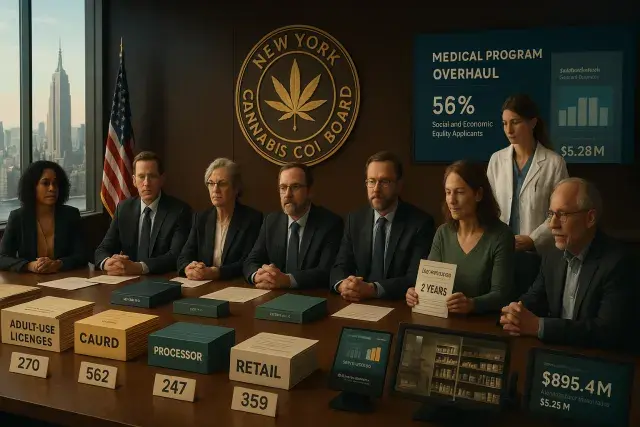
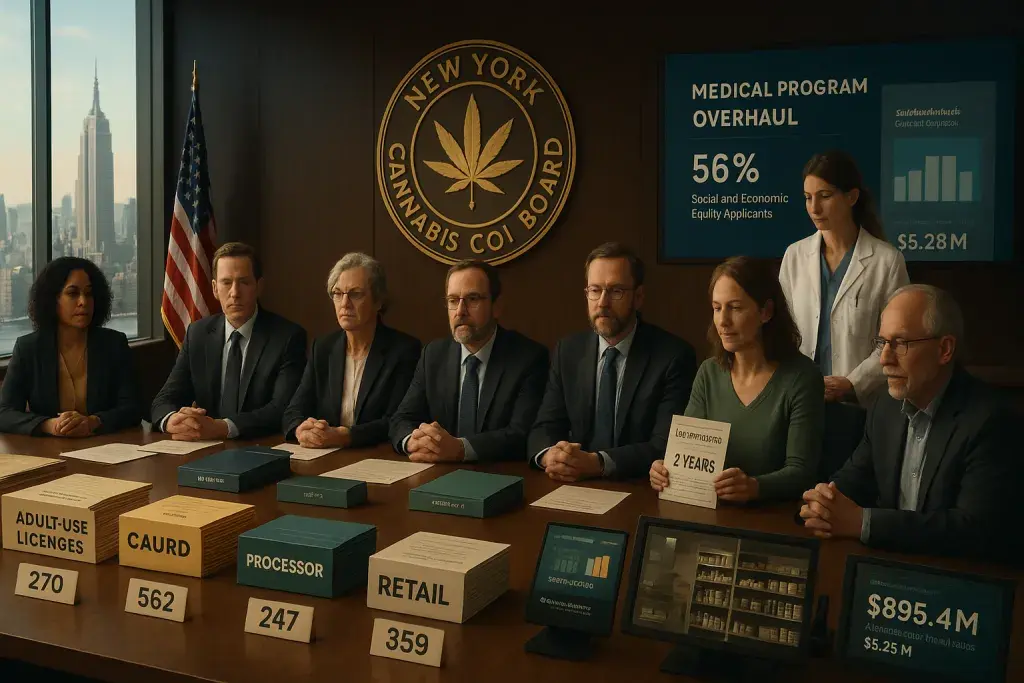
The 24 new licenses break down across the supply chain: 15 cultivator licenses, six processor licenses, two retail dispensary licenses, and one Conditional Adult-Use Retail Dispensary (CAURD) license. For operators tracking market saturation, the broader picture is this - New York has now issued 270 cultivator licenses, 562 processor licenses, 247 distributor licenses, 327 microbusiness licenses, 531 retail dispensary licenses, and 359 CAURD licenses. That's a dense and growing supply side pressing against a retail footprint that is still expanding. The board also approved 76 adult-use renewals, 15 CAURD renewals, 36 license amendments, and two application denials. Dispensary technology vendors and compliance software providers in adjacent states - operators evaluating platforms like IndicaOnline dispensary software in Montana, for instance - should note how New York's licensing volume is reshaping expectations around inventory management, seed-to-sale tracking, and multi-location POS infrastructure as comparable markets mature.
Fifty-six percent of all adult-use licenses issued statewide have gone to Social and Economic Equity applicants. That figure reflects a deliberate policy structure baked into New York's licensing framework from the start - and it carries real weight for wholesale buyers, brand partners, and investors evaluating the operator base. Equity-licensed operators often face distinct capital constraints and operational pressures that affect their purchasing cycles, compliance readiness, and long-term viability. Anyone selling into this market - whether that's a software vendor, a packaging supplier, or a wholesale cannabis brand - should understand that a majority of their prospective New York customers are operating under those conditions.
Medical Program Overhaul Extends Patient Reach and Possession Limits
The medical cannabis regulatory changes adopted at the same meeting are, in some respects, the more operationally significant development for licensed dispensing facilities. The updated rules - pending a Notice of Adoption publication in the New York State Register, with an effective date expected later this month - touch three areas that directly affect dispensary compliance protocols and patient flow.
Patient certifications can now be issued for up to two years rather than one. That's a meaningful shift. Longer certification windows reduce the administrative friction that pushes patients out of the medical market and into adult-use retail, and they lighten the documentation burden on both practitioners and dispensary staff verifying patient status at the point of sale. Possession limits have also increased: registered patients and caregivers may now hold up to a 60-day supply, or up to three ounces of cannabis and 24 grams of concentrate - whichever amount is greater. Dispensaries will need to update their intake workflows and compliance logs to reflect these new thresholds.
Here's the part that will require the most immediate attention from dispensary compliance teams: out-of-state medical cannabis patients will now be permitted to purchase from New York registered dispensing facilities while visiting the state. Reciprocity provisions like this aren't unusual in other regulated states, but they add a layer of verification complexity at the counter. Staff will need clear protocols for validating out-of-state patient credentials - what documentation is accepted, what registry checks are required, and how those transactions are recorded in seed-to-sale systems. Figuring that out before the rules take effect is not optional.
Market Revenue Is Growing, but Supply Pressure Is Real
The OCM reported approximately $895.4 million in combined adult-use and medical cannabis sales through June, with average daily retail sales reaching roughly $5.26 million in June alone. Those are substantial numbers for a market that was essentially nonexistent in licensed form just a few years ago. In practice, though, rising revenue figures at the market level don't automatically translate to healthy margins at the individual dispensary level - not when licensed retail locations are multiplying and competing for the same consumer base.
The continued growth of the licensed retailer count puts downward pressure on per-door sales averages even as the overall market expands. Wholesale pricing, inventory turnover, and SKU selection decisions all become sharper operational considerations in a crowded market. For dispensary owners watching those dynamics, the practical takeaway from the July 2 board meeting is straightforward: the regulatory environment in New York is stabilizing and growing more sophisticated, the medical program is being actively modernized, and the competitive retail environment is not getting easier.